
Is Your Business Safe From Payment Data Breaches?
Most people pay with cards or online. They trust your business to keep that data safe. If hackers steal it, you could lose money and trust.
So, how do you protect payment data?
You need to follow PCI-DSS rules. These rules help you keep your card info safe. If your business works with card data, you must follow them.
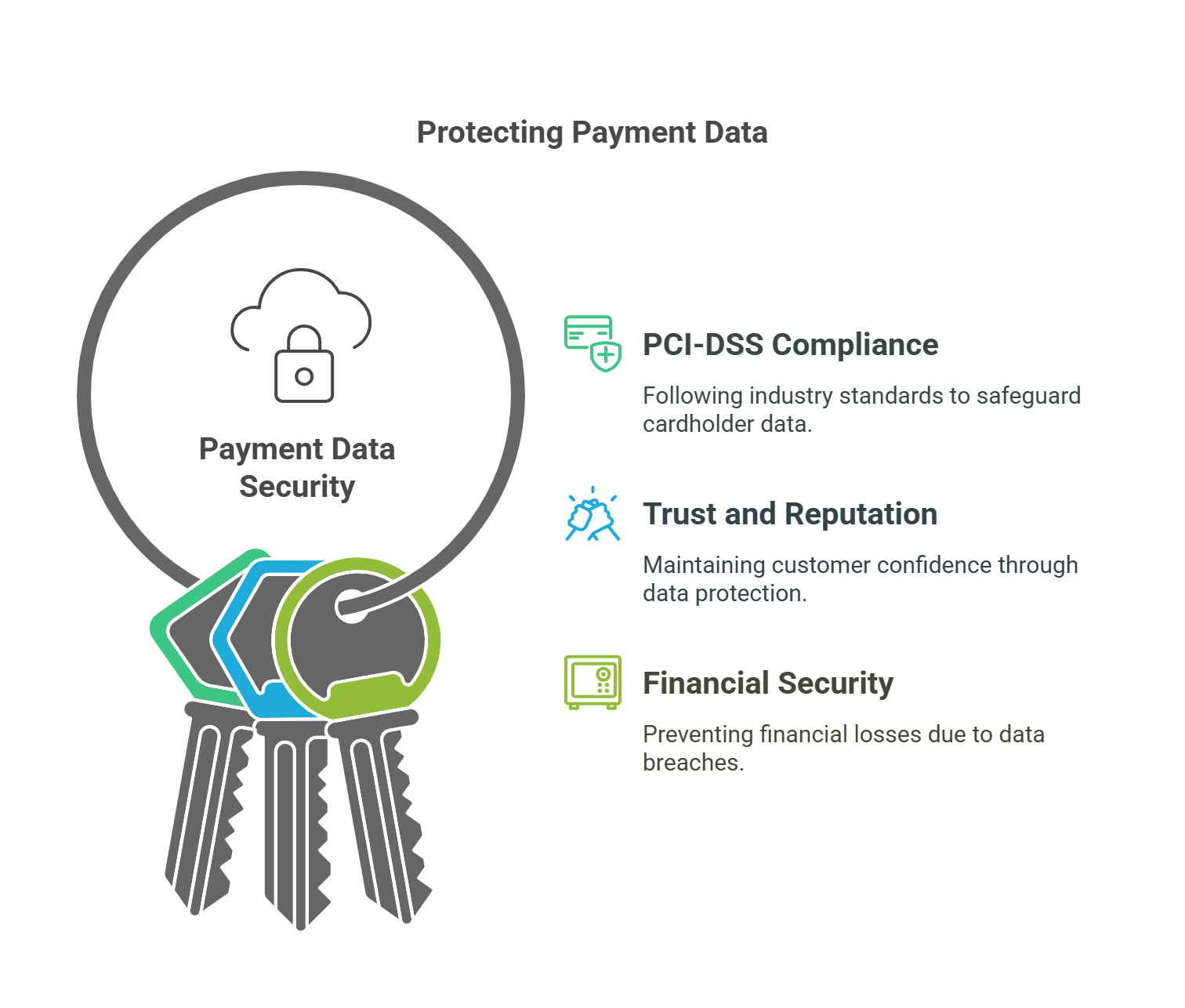
This guide will explain PCI-DSS, why it matters, and how to follow it.
What Is PCI-DSS Compliance?
PCI-DSS means Payment Card Industry Data Security Standard. It is a global rulebook made in 2004 by credit card companies like Visa and MasterCard.
These rules help stop credit card fraud. They give one clear set of steps for all businesses.
Why PCI-DSS Matters
1. Builds Customer Trust: When you protect payment data, customers feel safe. If you don’t, they may stop buying from you.
2. Avoids Big Fines: If you ignore PCI rules, you could pay $5,000 to $100,000 per month in fines. You could also lose your bank or face lawsuits.
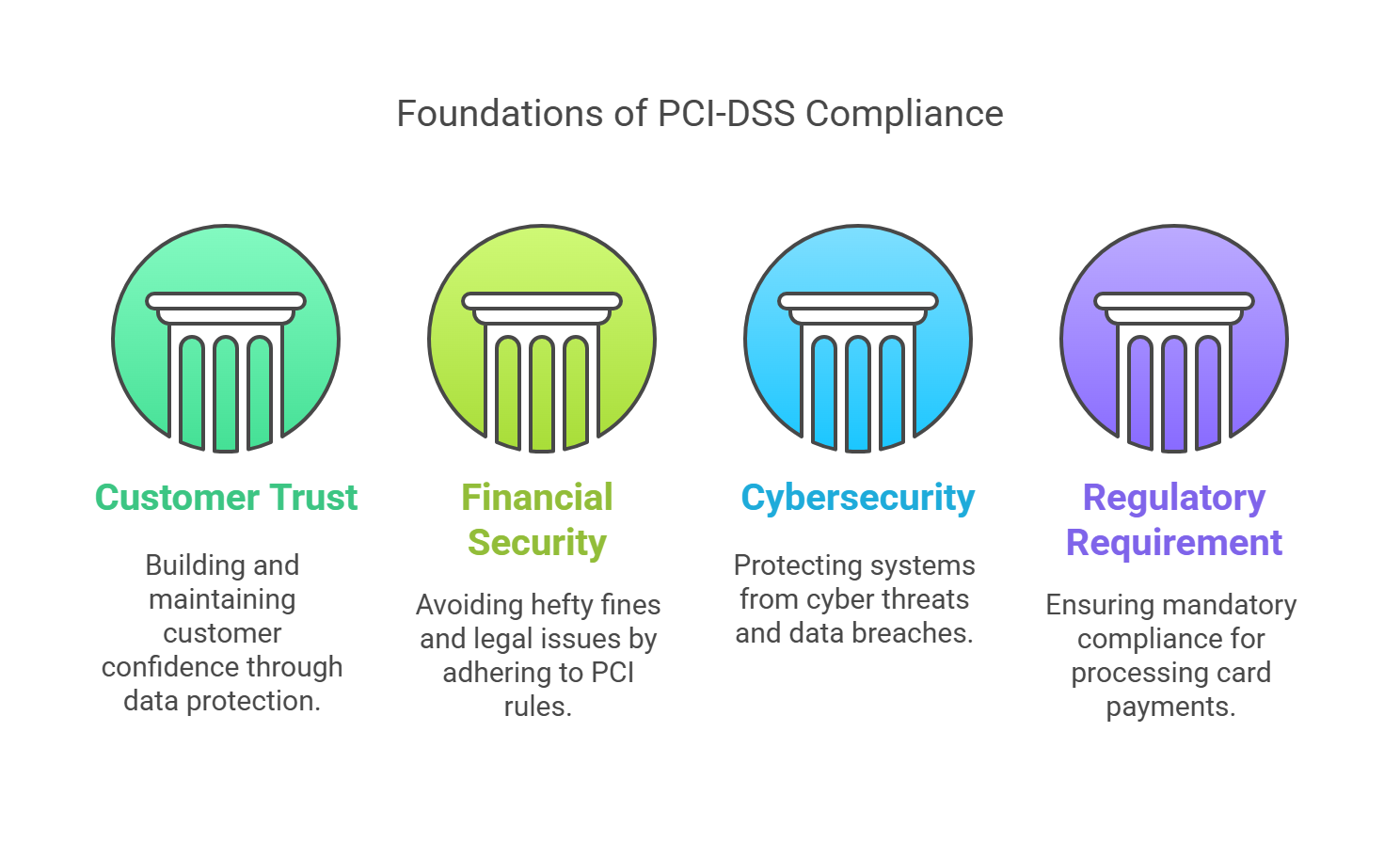
3. Stops Cyber Attacks: PCI-DSS helps block hackers. It makes your systems safer.
4. It’s Required: If you take card payments, PCI-DSS is not optional. You must follow it.
Who Must Follow PCI-DSS?
You must follow PCI-DSS if you:
- Sell products online or in-store
- Take card payments
- Make payment software
- Handle card data for others
All businesses must follow the rules, no matter how big or small.
PCI-DSS Compliance Levels
| Level | Yearly Card Sales | What You Must Do |
|---|---|---|
| 1 | Over 6 million | Full audit by expert + scan every 3 months |
| 2 | 1-6 million | Self-check + scans |
| 3 | 20K to 1 million | Self-check + scans |
| 4 | Under 20K | Self-check (depends on your bank) |
The 12 PCI-DSS Rules (Made Easy)
A. Keep Networks Safe
- Use firewalls.
- Don’t use default passwords.
B. Protect Card Data
- Store card info safely.
- Use encryption when sending data.
C. Fix Weak Spots
- Use antivirus tools.
- Keep your software safe and updated.
D. Limit Access
- Only let the right people see card data.
- Give everyone their login.
- Lock areas where data is stored.
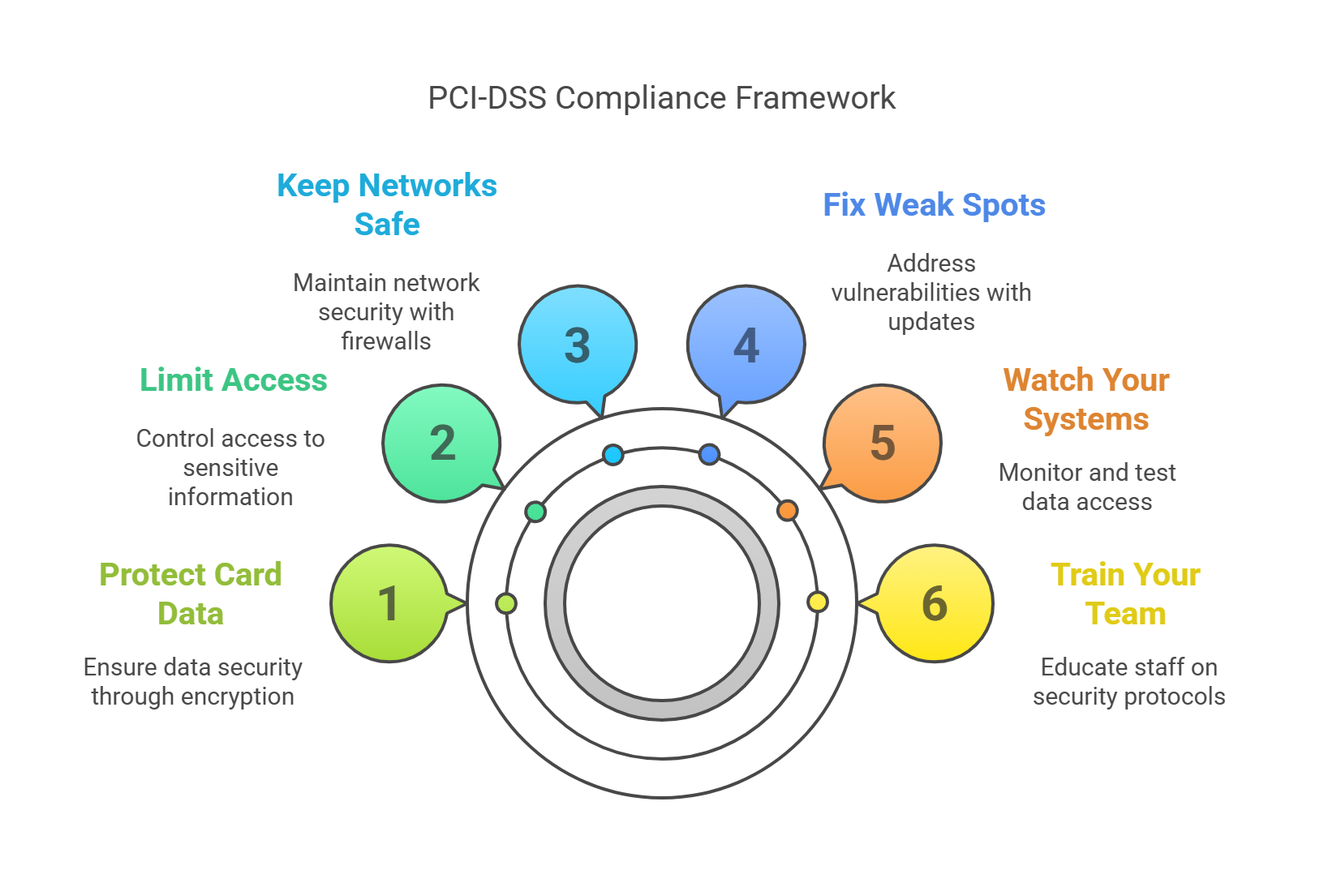
E. Watch Your Systems
- Track who sees your data.
- Test your system often.
F. Train Your Team
- Make a plan to stay safe. Train your staff.
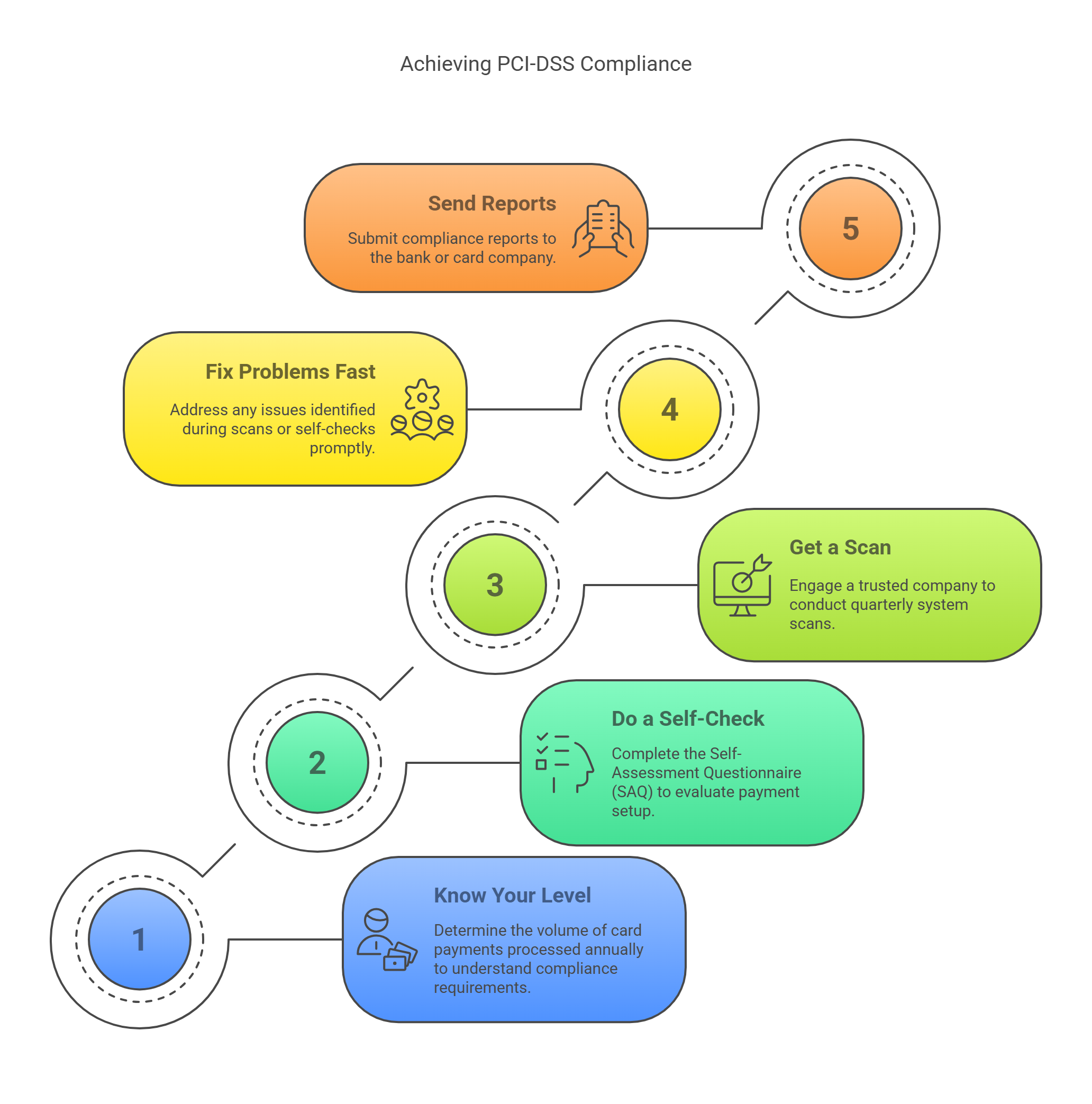
Steps To Follow PCI-DSS
1. Know Your Level: Check how many card payments you handle per year.
2. Do a Self-Check: Answer a “yes or no” form called SAQ. It checks your payment setup.
3. Get a Scan: A trusted company will scan your system every 3 months.
4. Fix Problems Fast: If the scan or quiz finds problems, fix them right away.
5. Send Reports: Send your results to your bank or card company.
Common PCI-DSS Mistakes
- Saving card data without safety steps
- Using old or unsafe software
- Sharing logins
- Skipping scans
- Thinking, small shops don’t get hacked
Tip: Hackers often go after small shops because they are easier to break into.
What It Costs
| Size | Method | Yearly Cost |
|---|---|---|
| Small | Self-check | $500 – $5,000 |
| Medium | Scan + Fix | $10,000 – $50,000 |
| Large | Full Audit | $50,000 – $100,000 |
Note: Not following PCI-DSS could cost even more.
PCI-DSS vs Other Security Rules
| Rule | What It Covers | Must Follow? |
|---|---|---|
| PCI-DSS | Card data | Yes, if you take cards |
| ISO 27001 | All kinds of data | Optional |
| SOC 2 | Business system controls | Optional |
| HIPAA | Health data | Yes, for healthcare |
FAQ
Q: What if I don’t follow PCI-DSS?
A: You could be fined or hacked. You might lose your bank.
Q: Is PCI-DSS full protection?
A: No. It helps, but no system is 100% safe.
Q: How often should I check compliance?
A: Every year. Scans must happen every 3 months.
Q: Can I keep CVV numbers?
A: No. Never store CVV codes after a payment.
Q: What’s the difference between encryption and tokenization?
A: Encryption turns data into code.
Tokenization swaps data with fake information. Both help keep data safe.
Final Thoughts: Make Security a Priority
PCI-DSS is more than rules. It shows you care about safety. It protects your business and your customers.
Start today. Check your systems. Fix the gaps. Stay safe.
Need Help? Ask a PCI expert. Or try a free PCI-DSS quiz. Don’t wait until it’s too late.